
Discover the spiritual journey of Nashik–Trimbakeshwar Simhastha Kumbh Mela 2027 with complete information about holy bathing, temples, routes, accommodation, sightseeing and travel planning.
Kumbh Mela is one of India's most sacred religious gatherings, bringing millions of devotees together for holy bathing, prayers and spiritual celebrations. In 2027, pilgrims can explore the divine atmosphere and rich traditions of Kumbh Mela in both Haridwar and Nashik, each offering a unique pilgrimage experience.
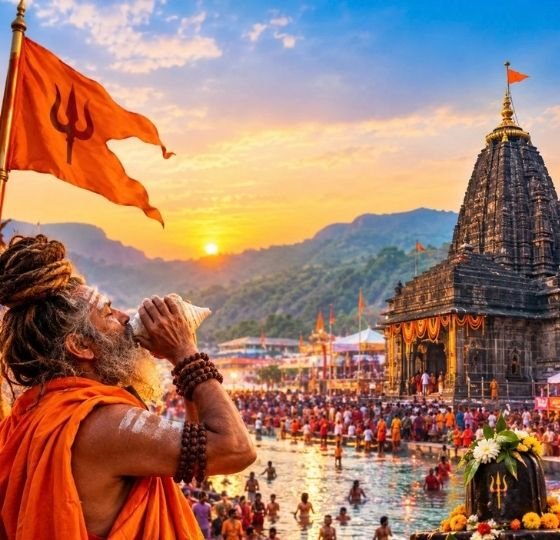
Nashik Kumbh, also known as Simhastha Kumbh, is one of India's most important spiritual gatherings. Millions of pilgrims, saints, sadhus and devotees visit Nashik and Trimbakeshwar for sacred rituals and holy bathing.
Simhastha Kumbh has deep religious and cultural significance. Devotees participate in holy bathing, prayers, spiritual activities and traditional gatherings of saints and akhadas.
The 2027 Simhastha Kumbh is centred around Nashik and Trimbakeshwar. Nashik is associated with the sacred Godavari region, while Trimbakeshwar is a major pilgrimage centre and one of the twelve Jyotirlingas.
Important religious events and major stages of Nashik–Trimbakeshwar Simhastha Kumbh Mela 2027.
The First Amrit Snan of Nashik Kumbh Mela 2027 will take place on Monday, 2 August 2027, coinciding with Ashadh Somvati Amavasya. The sacred bathing rituals will centre around Ramkund in Panchavati, Nashik, where akharas participate in ceremonial processions before taking the holy dip in the Godavari River.
The Second Amrit Snan is scheduled for Tuesday, 31 August 2027, on Shravan Amavasya. It is one of the principal bathing occasions of the Simhastha and is expected to attract large numbers of pilgrims. The major sacred bathing locations include Ramkund in Nashik and Kushavarta Kund at Trimbakeshwar, with akhara rituals forming an important part of the occasion.
The Third and Final Amrit Snan takes place across two dates. On Saturday, 11 September 2027, the principal bathing observance is at Ramkund, Nashik. On Sunday, 12 September 2027, the corresponding observance takes place at Kushavarta Kund, Trimbakeshwar. This two-day schedule reflects the separate roles of Nashik and Trimbakeshwar in the Simhastha bathing traditions.
Note: Official dates for individual bathing days, flag hoisting and other major ceremonies will be updated here as and when announced by the Nashik–Trimbakeshwar Kumbh Mela Authority.
Explore the important dates, religious occasions and pilgrimage tips for planning your Nashik Kumbh Mela visit.
| DATE & OCCASION | SIGNIFICANCE | PILGRIM TIPS |
|---|---|---|
|
01
October 31, 2026
Dharmadhwaj Arohan
|
The sacred flag-hoisting ceremony marks an important milestone in the Nashik–Trimbakeshwar Simhastha preparations. | The ceremony is scheduled for 12:02 PM at Ramkund, Nashik and Kushavarta Kund, Trimbakeshwar. |
|
02
July 17, 2027
Karka Sankranti
|
Marks the Sun's transition into Cancer and the beginning of an important spiritual period. | Arrive early to experience the opening rituals and morning atmosphere. |
|
03
July 18, 2027
Guru Purnima
|
A day dedicated to spiritual teachers, saints and respected Akhada leaders. | Allow extra time for visiting Akhadas and attending religious gatherings. |
|
04
July 29, 2027
Nagar Pradakshina
|
A traditional grand city procession in which devotees participate in a sacred circumambulation of Nashik. | Wear comfortable footwear, carry water and check procession route updates. |
|
05
Aug 17, 2027
Shravan Purnima
|
Observed with Raksha Bandhan celebrations, prayers and traditional holy bathing. | Plan your Ramkund visit in advance and allow extra time for local travel. |
|
06
Sept 5, 2027
Rishi Panchami
|
Observed through prayers, purification rituals and remembrance of ancestors. | Check local arrangements if you plan to perform traditional family rituals. |
|
07
Nov 14, 2027
Kartik Purnima
|
A sacred full-moon occasion associated with prayers, lamps and Dev Deepawali celebrations. | Visit the Godavari ghats in the evening to experience traditional lamp ceremonies. |
|
08
Jan 26, 2028
Mauni Amavasya
|
Traditionally observed with silence, meditation and spiritual practices. | Check traffic advisories and security instructions before travelling. |
|
09
Feb 23, 2028
Maha Shivratri
|
An important festival marked by Shiva worship, fasting and night-long prayers. | Plan your Trimbakeshwar darshan early and follow temple entry guidelines. |
|
10
May 25 – June 2, 2028
Ganga Dussehra
|
A multi-day celebration associated with the sacred descent of River Ganga. | Check local event updates and travel arrangements before your visit. |
Travel Tip: Accommodation near major bathing ghats and important religious areas can become limited during peak Kumbh dates. Advance booking is recommended.
Everything you need to know before attending the first holy bathing ceremony of Nashik Kumbh Mela 2027.
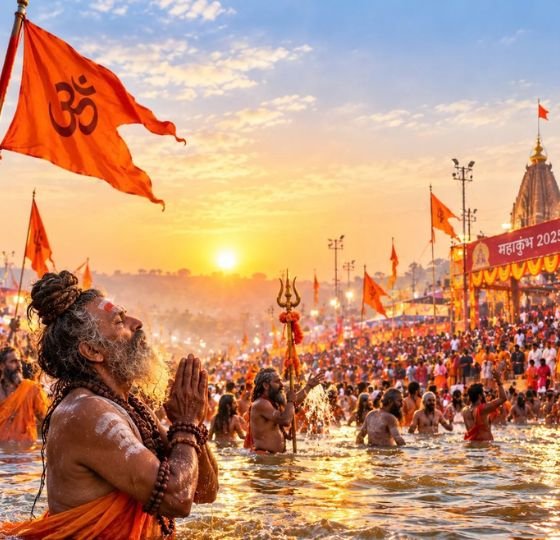
2 August 2027
The First Amrit Snan of Nashik Kumbh Mela 2027 will take place on Monday, 2 August 2027, coinciding with Ashadh Somvati Amavasya. The sacred bathing rituals will centre around Ramkund in Panchavati, Nashik, where akharas participate in ceremonial processions before taking the holy dip in the Godavari River.
Sacred Godavari River bathing areas in Nashik, including important ghats such as Ramkund. Specific bathing arrangements and access routes may be announced closer to the event.
Devotees consider bathing in the sacred Godavari during Kumbh a deeply spiritual act. The holy bath is associated with purification, devotion and seeking spiritual blessings.
On major Snan days, visitors should plan to reach the designated area well before the peak crowd period. The exact bathing timings and crowd movement plan should be followed as announced by the local authorities.
Important things to remember while visiting the First Snan.
Important: First Snan date, exact bathing timings, designated ghats, traffic restrictions and entry arrangements should be checked against the latest official Kumbh Mela instructions before travelling.
The Third and Final Amrit Snan takes place across two dates. On Saturday, 11 September 2027, the principal bathing observance is at Ramkund, Nashik. On Sunday, 12 September 2027, the corresponding observance takes place at Kushavarta Kund, Trimbakeshwar. This two-day schedule reflects the separate roles of Nashik and Trimbakeshwar in the Simhastha bathing traditions.
On major bathing occasions, traditional processions of different Akhadas form an important part of the Kumbh experience. Visitors may witness saints, sadhus, religious flags, traditional music and ceremonial processions.
Saints, Sadhus and spiritual leaders from different Akhadas participate in the religious activities of Kumbh. Their presence and traditional rituals are an important part of the spiritual atmosphere.
Nashik's sacred Godavari river and its important ghats are central to the Kumbh bathing traditions. Trimbakeshwar is also an important pilgrimage centre associated with the Simhastha Kumbh.

Reach the designated area well before peak crowd movement.
Follow official entry, exit, traffic and pedestrian route instructions.
Do not enter barricaded or restricted areas during religious processions.
Keep your family or travel group together in crowded areas.
Keep your phone charged and save important emergency contact numbers.
Check the latest local authority instructions before visiting the bathing areas.
Visitor Note: On major Snan days, access routes, bathing areas, parking arrangements and crowd movement may be regulated by the authorities. Always follow the latest official instructions.
Choose from comfortable hotels, peaceful ashrams, traditional camps and homely stays according to your travel style and budget.
| OPTION | GOOD FOR | DETAILS |
|---|---|---|
|
01
Hotels
Budget to Premium
|
Families & Comfort Seekers | Comfortable accommodation with better amenities and services. Hotels near important ghats can fill quickly during peak dates. |
|
02
Dharamshalas & Ashrams
Simple & Spiritual
|
Pilgrims & Budget Travellers | A peaceful and devotional stay option, often located close to temples and religious places. Facilities are generally basic. |
|
03
Tented Camps
Complete Kumbh Experience
|
Spiritual & Unique Experiences | Specially arranged for the Mela, these camps offer an immersive Kumbh experience. Comfort and facilities vary according to the camp category. |
|
04
Homestays & Guesthouses
Homely & Personal
|
Small Groups & Longer Stays | A more personal and homely experience for travellers staying for several days. Rooms can be limited, so advance booking is recommended. |
Travel Tip: Accommodation near major bathing ghats and important religious areas can become limited during peak Kumbh dates. Advance booking is recommended.
Nashik is well connected by air, rail and road, making it convenient for pilgrims travelling to the 2027 Simhastha Kumbh Mela.
The nearest airport is Ozar Nashik International Airport, located approximately 24 km from Nashik city centre.
Nashik Road Railway Station is the main railway station serving Nashik and is connected with major cities through the Indian railway network.
Nashik has bus connectivity with nearby cities and towns. State transport buses and other services can be used to reach Nashik and continue towards major pilgrimage areas.
Nashik is well connected by road. The Mumbai–Agra route passes through Nashik, while major highways connect the city with Mumbai, Pune, Surat and other important cities.
During major Kumbh bathing days, traffic routes, parking areas, public transport and access to pilgrimage zones may be regulated. Check the latest official travel and crowd-management instructions before starting your journey.
Plan your journey from Nashik Railway Station, Mumbai, Pune and Delhi with these practical travel routes.
Nashik Road is the main railway station serving Nashik. From the station, travellers can use taxi, auto-rickshaw or local transport towards the city and major pilgrimage areas such as Panchavati and Ramkund.
Mumbai and Nashik are connected by road and rail. By road, the Mumbai–Agra corridor provides the main connection. Visitors can choose private car, taxi, bus or train depending on the Kumbh crowd and transport arrangements.
Pune has road connectivity towards Nashik. Travellers can use private vehicles, taxis and bus services. Train options can also be considered depending on the travel date and available services.
Travellers from Delhi can reach Nashik by train, flight or a long-distance road journey. For Kumbh pilgrims, train or air travel followed by local transport can be more convenient.
During major Snan and Amrit Snan days, authorities may introduce temporary traffic diversions, restricted-entry zones, shuttle services, parking controls and pedestrian routes. Check the latest official Nashik–Trimbakeshwar Kumbh Mela instructions before travel.
Kumbh Mela ke saath Nashik ke famous temples, sacred ghats, caves aur nearby attractions ko bhi explore karein.
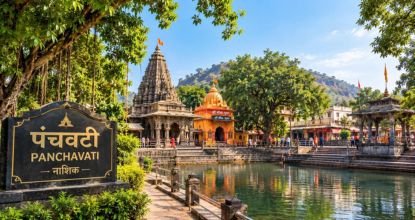 01
Panchavati is one of the most important religious areas of Nashik. It is located near the Godavari River and is surrounded by several famous temples and pilgrimage sites.
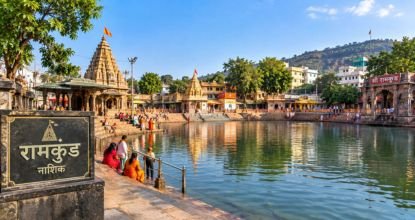 02
Ramkund is a sacred bathing place situated on the Godavari River. It is one of the most important pilgrimage locations in Nashik and holds special significance during Kumbh Mela.
 03
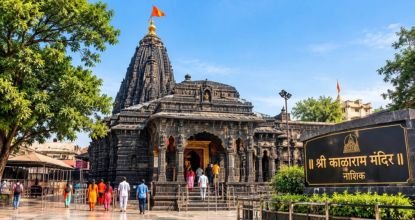
Kalaram Temple is a historic temple in Panchavati dedicated to Lord Rama. It is one of the prominent religious attractions for pilgrims visiting Nashik.
 04
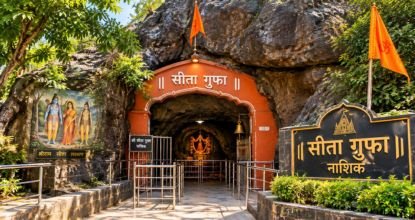
Sita Gufa is located in Panchavati and is associated with the Ramayana tradition. It is a popular spiritual and historical attraction visited by pilgrims and tourists.
 05
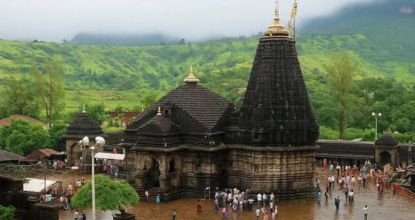
Trimbakeshwar is a major pilgrimage centre near Nashik and home to the Trimbakeshwar Jyotirlinga. It is also closely associated with the Simhastha Kumbh tradition.
 06
Visitors can also explore other attractions around Nashik, including temples, caves, spiritual places, viewpoints and other nearby destinations according to their travel schedule.
If you are visiting Nashik for Kumbh Mela 2027, keep some additional time to explore Panchavati, Ramkund, Kalaram Temple, Sita Gufa and Trimbakeshwar.
Plan your Nashik–Trimbakeshwar Kumbh Mela 2027 journey with comfortable hotels, private cab, sightseeing and complete travel assistance.
Choose comfortable accommodation in Nashik and nearby areas according to your travel plan and availability.
Travel conveniently with private cab services for railway station, airport transfers, sightseeing and local travel.
Explore Panchavati, Ramkund, Kalaram Temple, Sita Gufa, Trimbakeshwar and other nearby attractions.
Get a complete Kumbh Mela travel package combining hotel, cab, sightseeing and travel assistance in one plan.
Tell us your travel date, number of travellers and preferred services. We can help you plan a suitable hotel, cab, sightseeing and complete Kumbh tour package.
Explore upcoming Kumbh events, their locations and expected years across India's major pilgrimage destinations.
| YEAR | KUMBH TYPE | LOCATION |
|---|---|---|
| 2026–27 | Purna Kumbh (Simhastha) | (Nashik–Trimbakeshwar, Maharashtra) Hosts traditional Simhastha pilgrimage gatherings. |
| 2027 | Ardh Kumbh | (Haridwar, Uttarakhand) A sacred gathering on the banks of the River Ganga. |
| 2028 | Purna Kumbh (Simhastha) | (Ujjain, Madhya Pradesh) A major pilgrimage associated with the Shipra River. |
| 2031* | Ardh Kumbh | ( Prayagraj, Uttar Pradesh) A sacred pilgrimage destination at the Triveni Sangam. |
| 2033 | Purna Kumbh | (Haridwar, Uttarakhand) Devotees gather for holy bathing and religious observances. |
| 2037 | Purna Kumbh | (Prayagraj, Uttar Pradesh) Known for sacred bathing at the confluence of rivers. |
| 2039 | Purna Kumbh (Simhastha) | (Nashik–Trimbakeshwar, Maharashtra) A traditional pilgrimage linked with the Godavari River. |
| 2039 | Ardh Kumbh | (Haridwar, Uttarakhand) A religious gathering centred on Ganga Snan and prayers. |
| 2040 | Purna Kumbh (Simhastha) | (Ujjain, Madhya Pradesh) Pilgrims visit sacred sites along the River Shipra. |
| 2043 | Ardh Kumbh | (Prayagraj, Uttar Pradesh) A gathering associated with the sacred Triveni Sangam. |
| 2045 | Purna Kumbh | (Haridwar, Uttarakhand) A pilgrimage centred on the holy River Ganga. |
Important: Future event years and classifications should be verified with official announcements before publication.